
For creators
Use Space Radar footage in your videos
You may use any footage, still or recording from Space Radar in your videos, streams, posts, books, lessons and talks, commercial ones included, with this credit: Space Radar (spaceradar.ai). No account, no fee and no need to ask.
In the app: Share, then Record, to film a view, a flight path or a trip.
The credit
Put Space Radar (spaceradar.ai) on screen or in the description. Where planets, moons or stars fill the frame, add the makers of their maps and catalogues, whose licences ask for it: Solar System Scope (solarsystemscope.com); NASA, ESA, A.A. Simon, M.H. Wong (Hubble OPAL programme, doi:10.17909/T9G593), adapted; OpenNGC (Mattia Verga), Harris (1996, 2010 edition), Green (2024 October version), the Caldwell numbers from Wikipedia; HYG v4.4 (David Nash), from Hipparcos and Gaia; AT-HYG v4.0 (David Nash), from Tycho-2, Hipparcos and Gaia DR3.
Please caption Space Radar pictures as drawings from measured positions, not photographs, and do not suggest that NASA, ESA or any other agency made or endorses your video: Space Radar is not part of any of them.
The exceptions
A few catalogues the app draws are licensed for non-commercial or scientific use only. If one of these fills your frame and your work is commercial, leave that view out or ask the catalogue's owner. Read from the project's registries when this page was built:
- CDS VizieR catalogue archive (Strasbourg) (scientific use): Free of usage in a scientific context, with the original authors and publication cited
- ESA Gaia archive (Gaia DR3), read by scripts/build_deep_lmc.py (a non-commercial term): CC BY-NC 3.0 IGO, as the licence page read 2026-10-16 says
- CDS VizieR query service (asu-tsv), read by scripts/build_deep_clusters.py (a non-commercial term): Free of usage in a scientific context, with the original authors and publication cited; the open clusters' members are Gaia DR3 data, CC BY-NC 3.0 IGO
- CDS VizieR (four catalogues of cluster members and their distances), read by scripts/build_deep_galclusters.py (scientific use): Free of usage in a scientific context, with the original authors and publication cited
- Kreiner 2004, up-to-date linear elements of eclipsing binaries (Acta Astron. 54, 207), VizieR J/AcA/54/207, read by hand into scripts/build-variables.py (scientific use): Free of usage in a scientific context, with the original authors and publication cited
- CDS VizieR through its Harvard-Smithsonian mirror (JLA supernovae, J/A+A/568/A22; Keck HIRES velocities, J/AJ/153/208), inline in two Lab pages (scientific use): Free of usage in a scientific context, with the original authors and publication cited
- The Sun's face of the day: courtesy of NASA/SDO and the AIA, EVE, and HMI science teams (a non-commercial term): Not copyrighted unless noted; non-commercial and educational use needs no authorization, credited "Courtesy of NASA/SDO and the AIA, EVE, and HMI science teams" (read 2026-10-15)
- Nearby galaxies: the Updated Nearby Galaxy Catalog (Karachentsev, Makarov & Kaisina 2013), via VizieR, CDS (scientific use): VizieR terms: free of usage in a scientific context, the authors and publication cited
- Open clusters: Hunt & Reffert 2023 from Gaia DR3 (ESA/Gaia/DPAC, CC BY-NC 3.0 IGO), via VizieR, CDS (a non-commercial term): Gaia DR3 derived: CC BY-NC 3.0 IGO (ESA/Gaia/DPAC); VizieR terms
- Variable stars: General Catalogue of Variable Stars (Samus et al. 2017) (scientific use): VizieR: free for scientific use with the authors cited
Everything else on screen is the project's own work (MIT), public domain, CC0, CC BY or CC BY-SA data whose credit is above, or NASA media, which NASA does not copyright. Every source and its licence is in the sources and in CREDITS.md. This is how the project reads those licences, not legal advice.
Media kit
- The mark (SVG)
- The wordmark, for dark backgrounds (SVG)
- The wordmark, for light backgrounds (SVG)
- Screenshots and the description to copy, on the press page
- Free 3D models and maps for your own scenes



One paragraph, to copy: Space Radar is a free, open-source 3D map of space in the browser. It shows the satellites, the space station, the planets, the nearest stars and the galaxies where they really are, worked out from public data, and says what is measured and what is illustrative.
The clip library
Each release, a job films every guided trip in 4K (3840 x 2160, 30 frames a second, with captions) in render mode: the app runs on a clock that moves one frame at a time, so no frame is dropped however slow the machine. The job is scripts/creator_clips.py, which runs tools/render-trip.mjs once a trip.
Samples
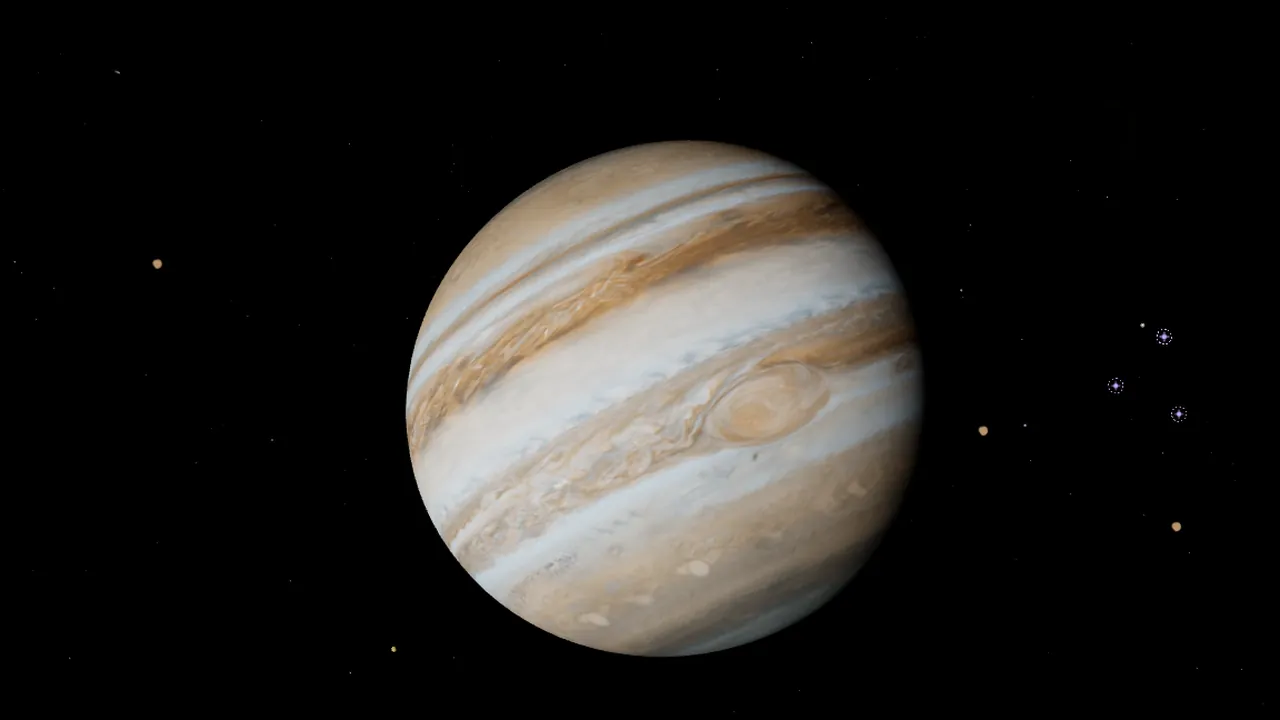
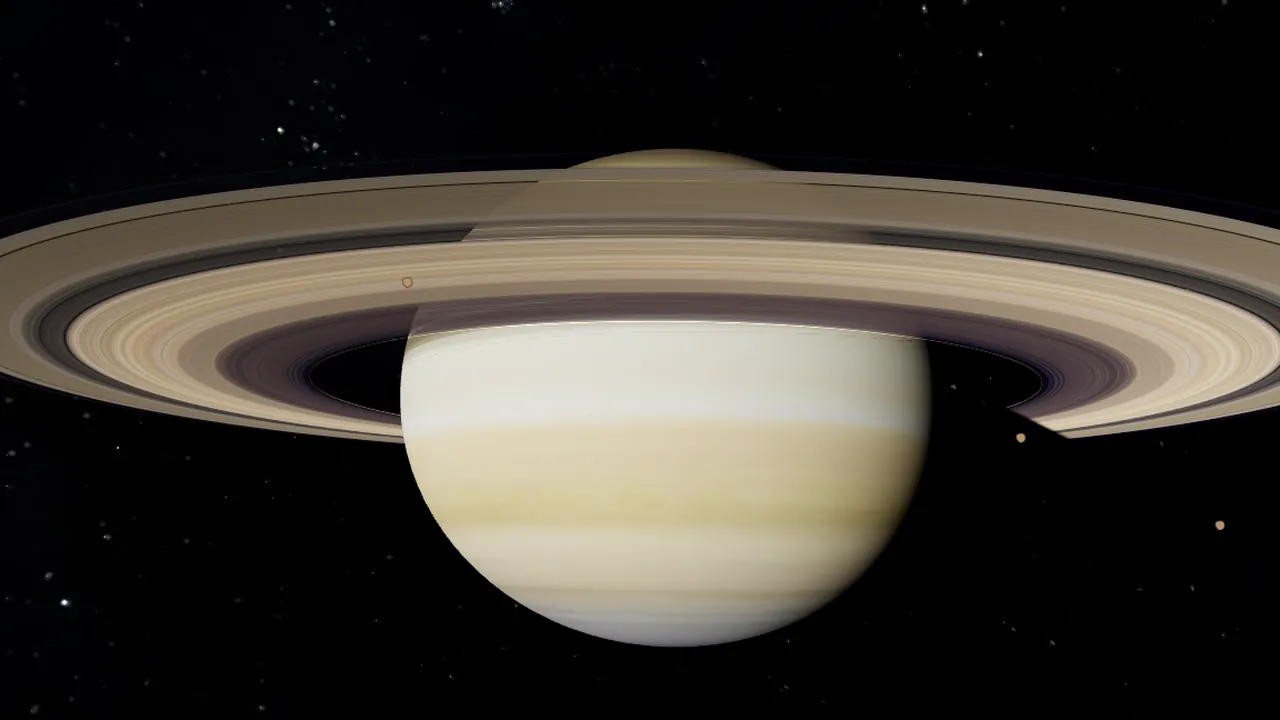
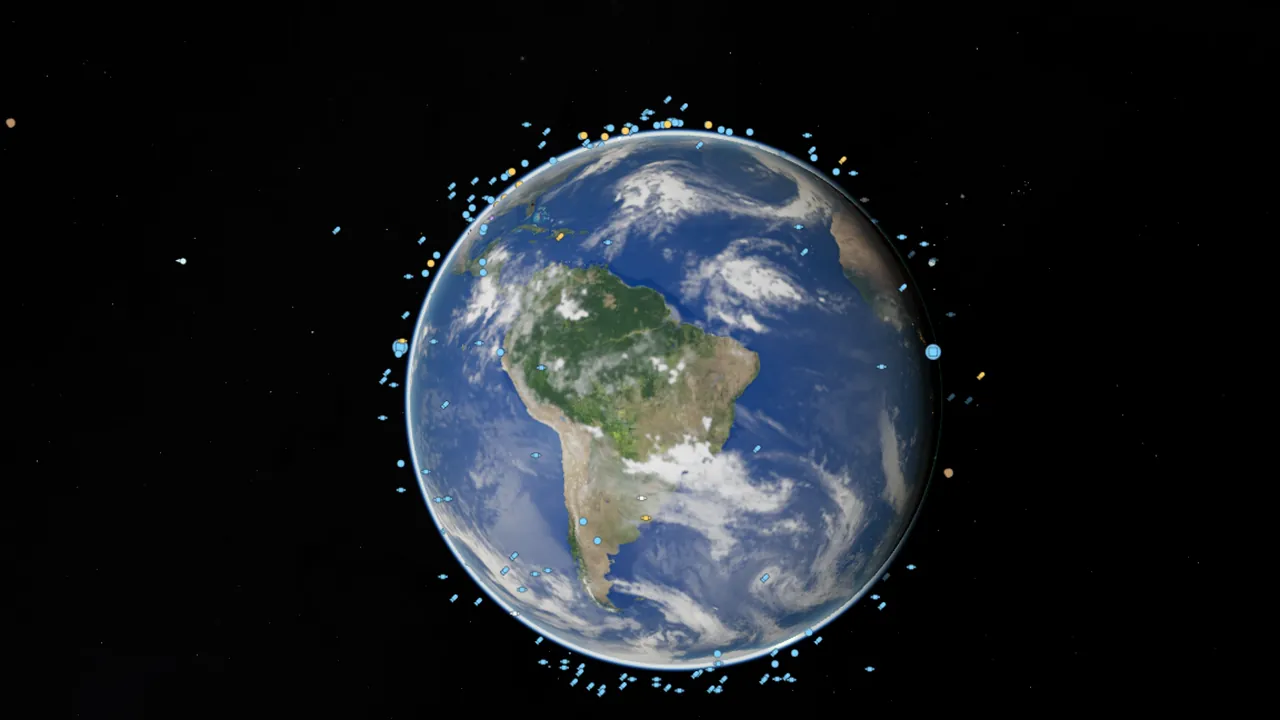
Stills from the app with every panel hidden, 1280 x 720, made on 7 November 2026. Credit: Space Radar (spaceradar.ai), with the planet maps' makers (Solar System Scope, CC BY 4.0, or NASA), as the app's Sources panel lists them.
The 33 trips
- Where people are living in space right now made at release
- From your ground to the space station made at release
- The strangest things we have ever sent made at release
- To the edge of what we know made at release
- From your roof to the edge made at release
- Travel to exoplanets made at release
- Where we have landed on the Moon made at release
- Out past Jupiter, to the farthest thing we sent made at release
- A year in a minute made at release
- Chasing the solar eclipse made at release
- The constellations made at release
- The living Earth made at release
- Tonight from your street made at release
- Why the Moon changes shape made at release
- The Sun today made at release
- The planets tonight made at release
- Mars, where we have driven made at release
- The life of a star made at release
- Black holes made at release
- The sky as telescopes see it made at release
- A dark sky made at release
- Asteroids, and the ones that come close made at release
- Satellites and space junk made at release
- Comets and meteor showers made at release
- The birth of the Solar System made at release
- Back to the Moon made at release
- Into the Helix made at release
- Inside a neighbouring galaxy made at release
- Across the Local Group made at release
- Out to the edge of the universe we can see made at release
- Two pads at Kennedy, two ages of rockets made at release
- Walk the landing sites made at release
- Skies of other worlds made at release
The 12 Moments (Apollo 11, Sputnik 1 and the others) are not trips and are not filmed by the job; record them with the Record button, which films them live.
Questions
Ask on GitHub Discussions. A credit that is wrong? Tell us on GitHub (it needs a free GitHub account).